
How to Read a Certificate of Analysis (CoA)
By Kinetix Research Editorial Team · Published October 11, 2026 · 1 min read
Quick Answer
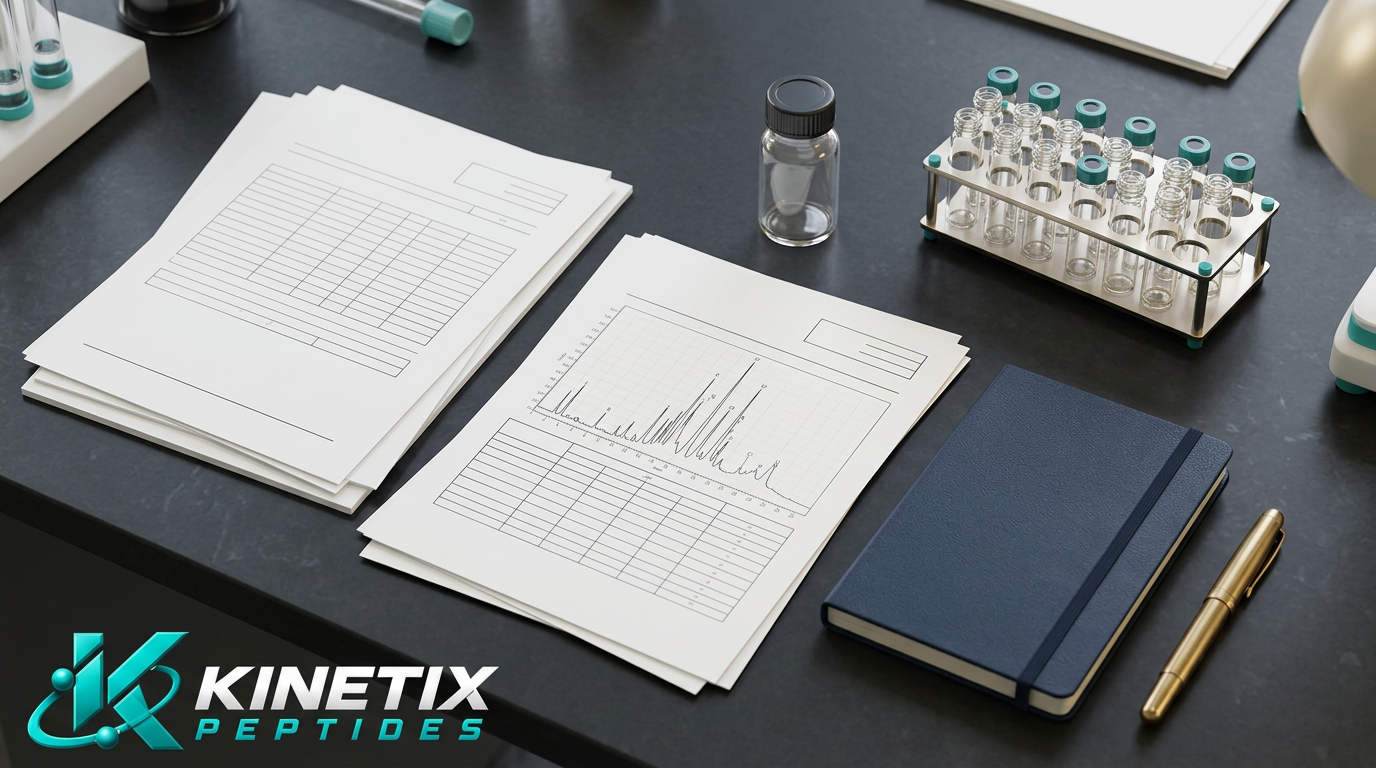
A Certificate of Analysis (CoA) is a document that records the test results for a specific batch of material. To read one, match the batch number to your vial, check which tests were run and by which method, compare each result with its stated specification, and confirm the date and the testing laboratory.
Key Takeaways
- A CoA applies to one batch, the lot number should match the product you have.
- Look for the method behind each result, not only the result.
- Each result should be shown against a specification (acceptance limit).
- Supporting data, such as chromatograms and mass spectra, makes a CoA easier to verify.
What a CoA is
A CoA summarizes the quality testing performed on a single production batch. It lets a researcher see what was tested, how, and whether the batch met its specifications.
Section-by-section
| Section | What to check |
|---|---|
| Product & batch/lot number | Matches the label on your vial |
| Appearance | Physical description, e.g. white lyophilized powder |
| Purity (HPLC) | Result, method and specification, e.g. ≥ 98% |
| Identity (MS) | Observed mass compared with the theoretical mass |
| Test date & laboratory | When and where testing was done |
| Signature / approval | Who reviewed and released the results |
Signs a CoA needs a closer look
- No batch or lot number, or one that does not match the product.
- Results without a named method or specification.
- No supporting chromatogram or mass spectrum when one is referenced.
- Missing dates or no identifiable testing laboratory.
Have questions about the documentation for a specific Kinetix batch? Contact our team.
Frequently asked questions
Is a CoA the same for every batch of a product?
No. A CoA is specific to the batch that was tested. A new batch should have its own results.
What does the mass spectrometry section show?
It compares the measured molecular mass with the expected (theoretical) mass of the peptide sequence to support identity.
References
- ICH Q6B Specifications: Test Procedures and Acceptance Criteria for Biotechnological/Biological Products, International Council for Harmonisation (ICH)
Research Disclaimer. Kinetix Research content is for educational and informational purposes only. It is not medical advice and does not describe the safety or effectiveness of any product for human use. All Kinetix products are for research use only. See our disclaimer.
Related research
Analytical Testing
What Is HPLC Testing? A Plain-Language Guide for Peptide Research
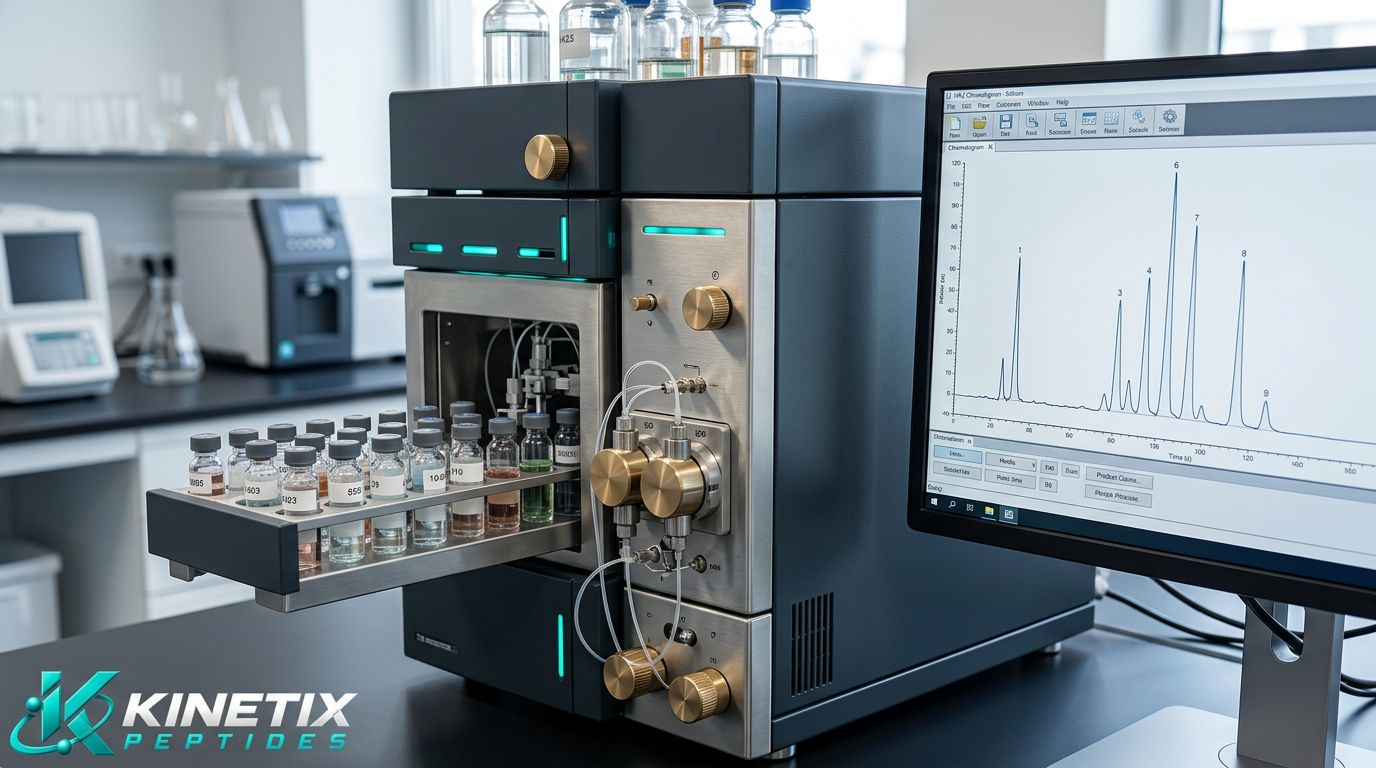
How high-performance liquid chromatography separates a sample, what a chromatogram shows, and where its limits are.

Analytical Testing
Understanding Peptide Purity: What the Percentage Does, and Does Not, Tell You
Purity figures are useful, but only when you know how they were measured and what they leave out.
Stay Updated on Research
Receive research insights, scientific updates, and educational resources from Kinetix Research.