
What Happens to a Peptide Molecule as It Degrades Over Time?
By Kinetix Research Editorial Team · Published October 5, 2026 · Updated October 14, 2026 · 2 min read
Quick Answer
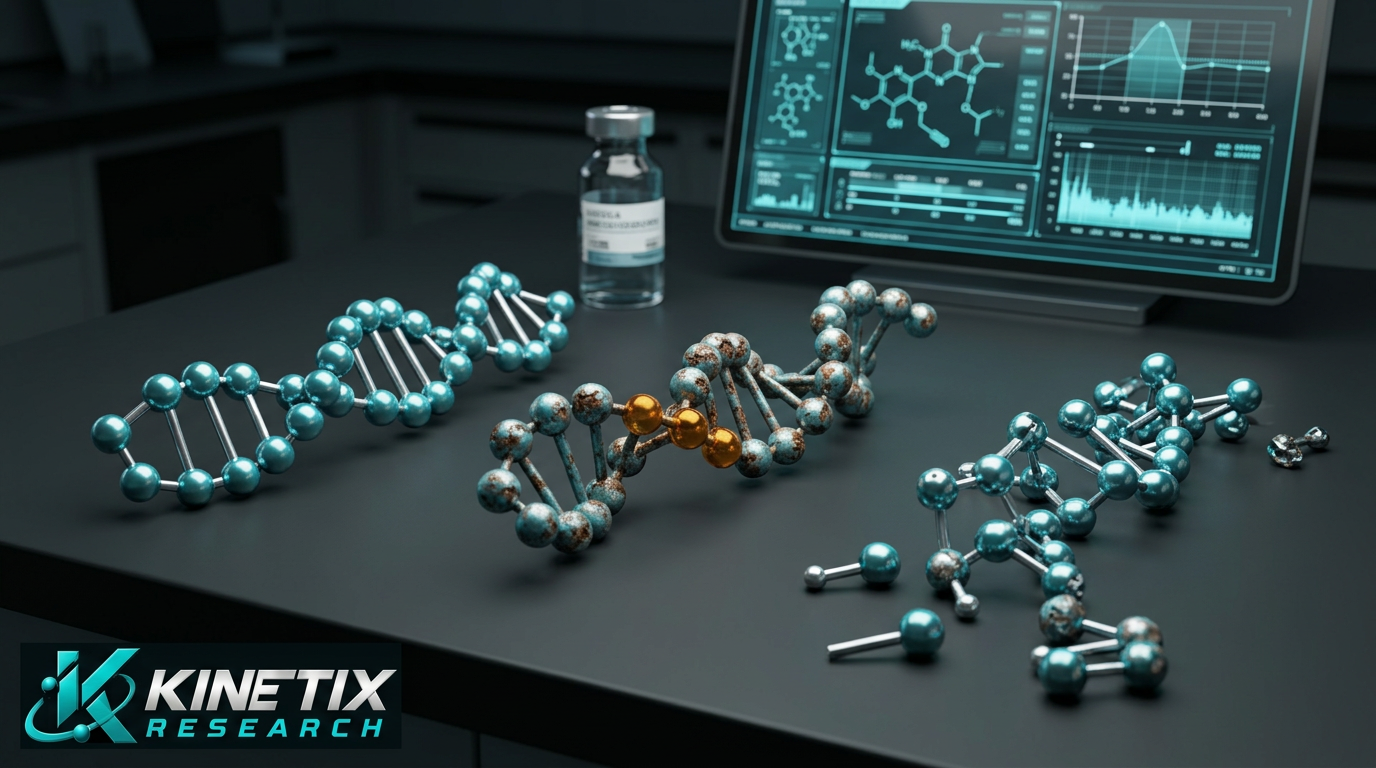
Peptide degradation can chemically alter residues or break the chain, producing molecules that differ from the original peptide. Oxidation, deamidation, hydrolysis and other pathways depend on sequence and environment. Aggregation or adsorption can also change a sample's usable composition without necessarily breaking covalent bonds. There is no universal degradation rate or shelf life for all peptides.
Key Takeaways
- Degradation is a set of pathways, not one uniform process.
- Chemical change and physical instability are related but distinct.
- Temperature, pH, moisture, oxygen and light can influence particular pathways.
- Stability conclusions require defined conditions, time points and methods.
Does degradation simply make the molecule disappear?
Usually not. Chemical degradation converts the original species into other species. Some pathways modify a side chain while leaving the chain largely intact; others cleave a bond and create shorter fragments. A sample can consequently become a mixture of intact peptide and multiple products rather than losing all signal at once.
The dominant pathway depends on the exact sequence and conditions. A change that is rapid in one buffer may be much slower in another. Results for a dried material do not automatically apply after dissolution, because solvent, pH and molecular mobility can change the reactions available to it.
Which degradation pathways do scientists examine?
| Pathway | What can change |
|---|---|
| Oxidation | Susceptible side chains can acquire chemical changes, sometimes altering mass and interactions. |
| Deamidation | Asparagine or glutamine-related chemistry can produce altered residues; rates are sequence- and condition-dependent. |
| Hydrolysis or enzymatic cleavage | Bond cleavage can form shorter chains or fragments. |
| Isomerization or racemization | Atom arrangement can change without a simple change in total elemental composition. |
| Aggregation or adsorption | Physical association or surface binding can reduce soluble recoverable material without requiring chain cleavage. |
These categories can overlap. A chemical modification may make association more likely, and an aggregate can behave differently during sample preparation. Appearance alone is a weak guide: an unchanged-looking solution can contain altered peptide, while cloudiness does not identify a particular degradation mechanism.
Does every degradation product lose biological activity?
No universal rule applies. A modified species may have reduced, retained or different activity in a particular assay. The outcome depends on which chemical feature changed and what the assay measures. Assuming that degradation merely weakens an otherwise identical effect overlooks possible altered interactions and analytical interference.
How is peptide degradation measured over time?
A stability-indicating method should distinguish relevant changes from the intact target under the study conditions. Chromatography can track emerging components, and mass spectrometry can help characterize them. Content, physical condition or functional measurements may also matter, depending on the research question.
- Define the material, container, physical state and environmental conditions.
- Measure at planned time points using procedures appropriate to the expected changes.
- Document acceptance criteria and whether the method can separate relevant degradation products.
- Investigate recovery losses separately from demonstrated chemical transformation.
ICH Q1A(R2) provides a framework for pharmaceutical stability studies, not a storage instruction for every research peptide. An applicable shelf-life claim requires data for the particular material and conditions. A release test taken once cannot independently establish how a later sample will behave.
Frequently asked questions
Do all peptides degrade at the same rate?
No. Sequence, modifications, formulation, physical state and environmental conditions all influence stability.
Can degradation occur without a visible change?
Yes. Chemical changes can occur without obvious changes in color or clarity; analytical testing is needed to assess them.
Does a purity result establish shelf life?
No. Shelf-life conclusions require a stability study under stated conditions with relevant time points and methods.
References
- Designing Formulation Strategies for Enhanced Stability of Therapeutic Peptides, Pharmaceutics, 2023
- ICH Q1A(R2): Stability Testing of New Drug Substances and Products, International Council for Harmonisation
- Analytical Techniques Used to Study the Degradation of Proteins and Peptides, Journal of Pharmaceutical and Biomedical Analysis, 1998
Research Disclaimer. Kinetix Research content is for educational and informational purposes only. It is not medical advice and does not describe the safety or effectiveness of any product for human use. All Kinetix products are for research use only. See our scientific disclaimer and editorial policy.
Related research
Peptide Science
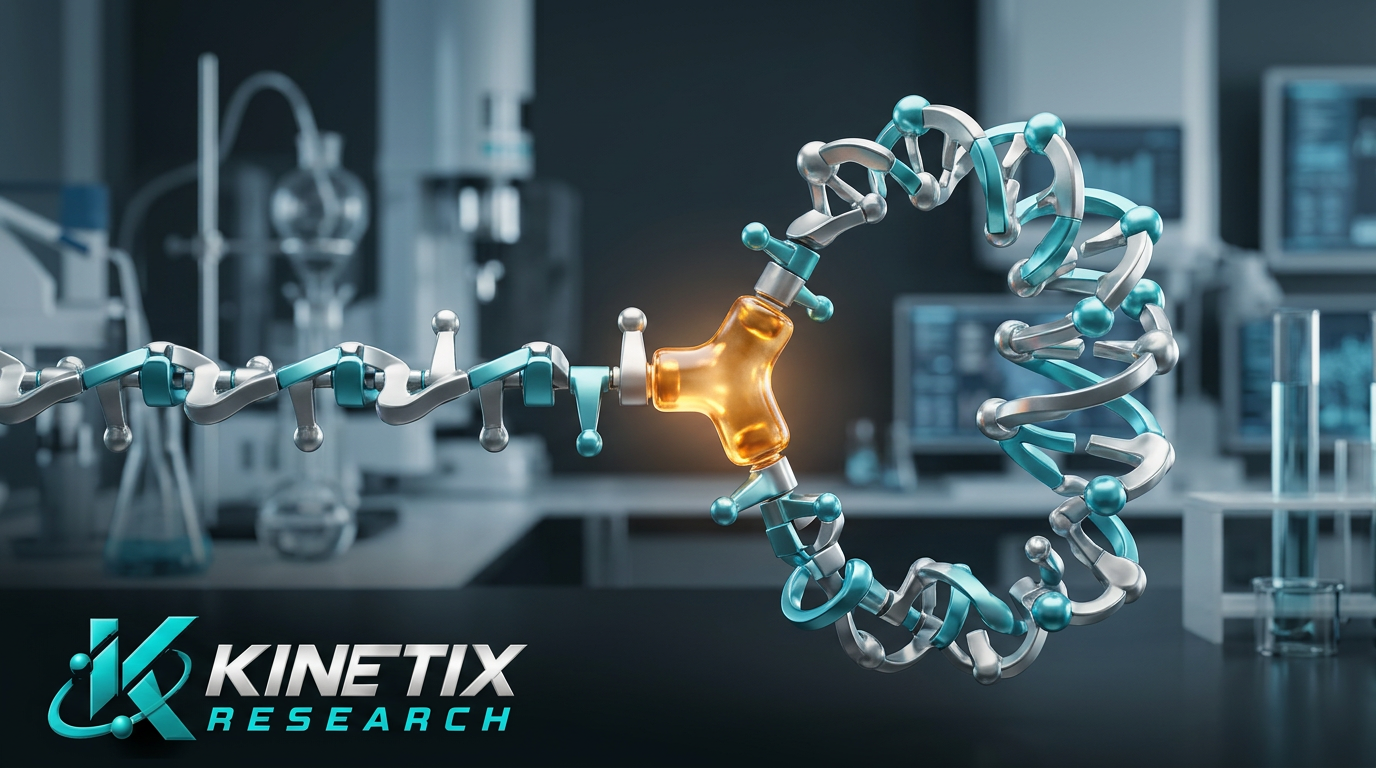
Why Can Changing Just One Amino Acid Dramatically Alter a Peptide's Properties?
Discover how a single amino acid substitution can alter charge, folding, target interactions and degradation, and why the effect depends on its position.
Analytical Testing
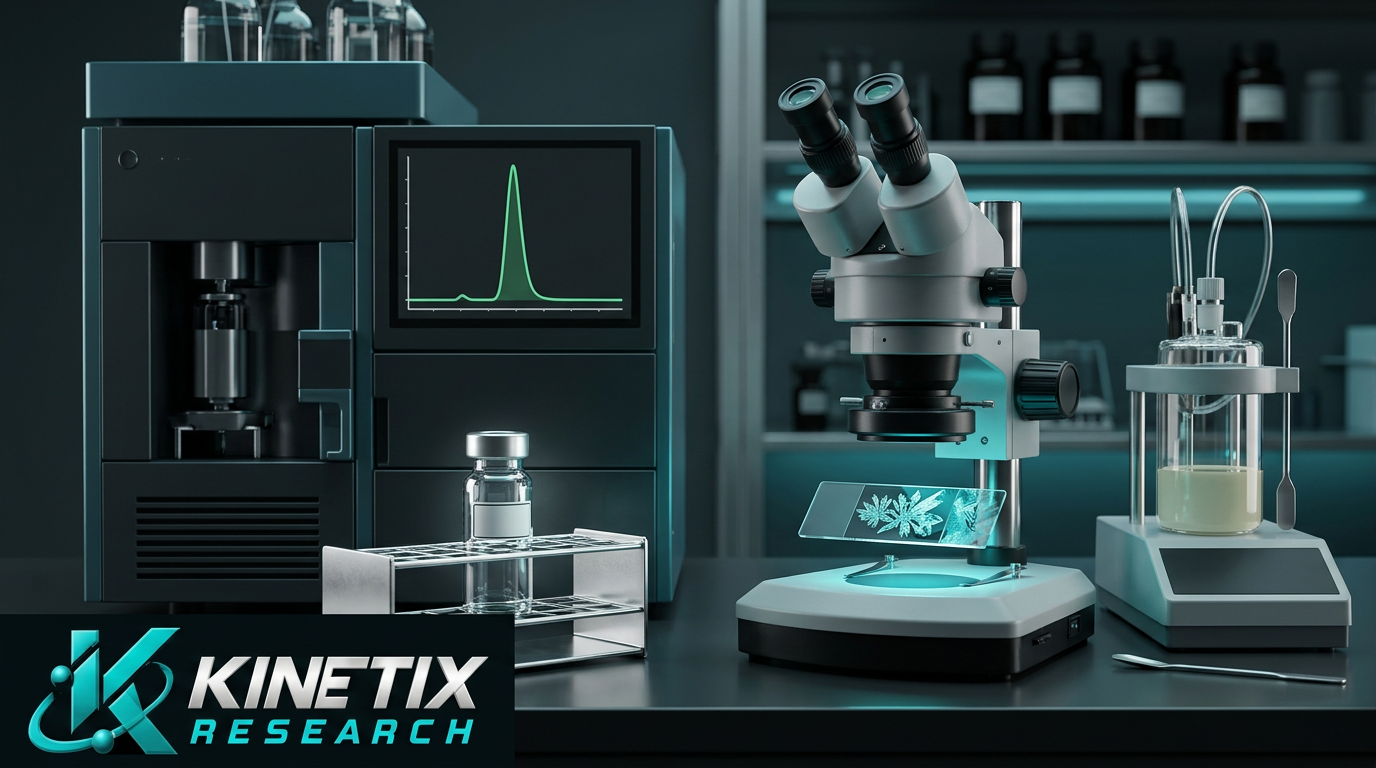
Can a Laboratory Report Show High Purity Even When the Sample Has Other Quality Problems?
High chromatographic purity can coexist with incorrect identity, low peptide content or untested contaminants; learn which measurements answer each question.
Research Documentation
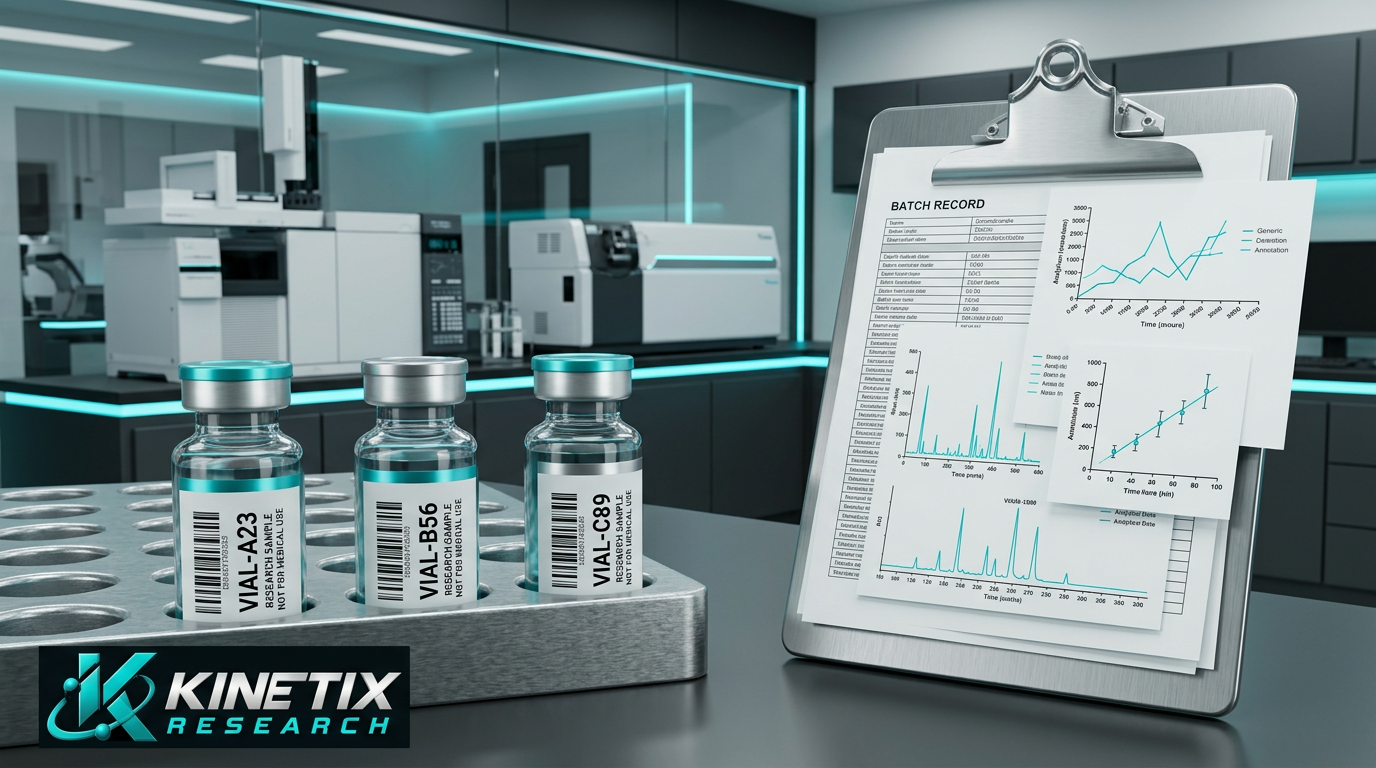
Why Doesn't a Certificate of Analysis Automatically Guarantee the Quality of Every Batch?
Understand why a Certificate of Analysis is sample- and lot-specific, how test scope and sampling matter, and what researchers should verify.
Contact the Kinetix Team
Let's Talk Science.
Have a question about an article or a topic you'd like us to explore? Say Hi to the Kinetix Team.
Stay Updated on Research
Receive research insights, scientific updates, and educational resources from Kinetix Research.